
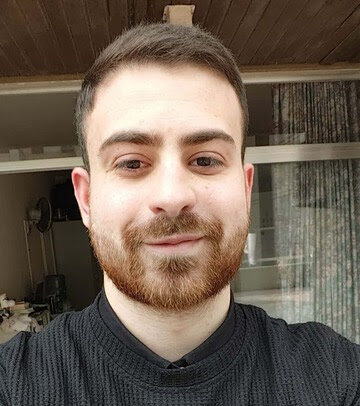
by Saba Kerry (Member of the Episcopal Church in Jerusalem and the Middle East)
I was on the phone with a friend recently. She was in Nablus, my home city, when she suddenly froze at the sound of a building being demolished nearby. What frightened her was not the demolition itself — we have, tragically, become accustomed to the sound of concrete collapsing — but the timing. “They weren’t supposed to take it down for another forty five minutes” she said, her voice trembling.
When surprise comes from a schedule change rather than from the destruction itself, you begin to understand something about the kind of life we have been forced to adapt to. This has become reality in the West Bank today: a rhythm of uncertainty, fear, and constant interruption that shapes even the smallest details of life. Movement between Palestinian cities has become unpredictable; it has been increasingly restricted over the past two decades. In recent months especially, the number of checkpoints and gates has surged. Almost every exit and entrance of Palestinian cities and villages is now controlled by a checkpoint or metal gate, and major roads are blocked at random. Simple daily tasks — going to university, getting to work, visiting family, reaching a hospital — are no longer guaranteed. What should be a short trip often becomes hours of waiting, interrogation, and humiliation.
When I went back home last summer, I traveled from Nablus to Ramallah — two cities less than 40 km apart — and yet I had to pass through five checkpoints. At the first one, a soldier walked up to our car and leaned in so close that the barrel of his rifle entered my window, only a few centimeters from my chest. He asked for my ID and where I was heading. For him, it was routine — a normal part of the day.
For us, these “routine checks” carry a quiet, constant fear. A single misunderstanding can escalate in seconds. We are expected to absorb these encounters without reaction, even as they accumulate as heavy, unprocessed traumas in our bodies. Israeli military raids into Palestinian cities and refugee camps happen frequently — sometimes multiple times a week. They shatter sleep, break doors, arrest or kill people, mostly young men, and sometimes kill bystanders who played no role in anything. Everyone here knows the sounds: military jeeps at 2 a.m., drones overhead, bursts of gunfire, tear gas drifting into homes. Sometimes the army comes for someone specific. Sometimes stray bullets hit houses. Sometimes people die simply for being in the wrong place at the wrong moment. This unpredictability becomes a rhythm we are forced to follow.
Recently, my brother — who had just started a new job — was driving home from his work, late at night when a raid began near his route. We heard the familiar sounds: army jeeps, drones circling above, bursts of gunfire echoing across the city. I called him immediately. He was driving right past the area under attack. He pulled into a stranger’s parking area, and the family — understanding the danger — invited him into their home. He waited there for hours, trapped between fear and darkness, until dawn. Only after the soldiers withdrew could he drive the remaining ten minutes to our house. The next morning, he went to work as if nothing had happened.
This, too, is part of life under occupation: there is no time to process trauma. You cannot take a day off to recover from what happened the night before. You simply continue, because stopping is not an option. Yet this continuation, this refusal to surrender, is its own quiet resilience. Another form of pressure is reshaping the West Bank: the rapid expansion of Israeli settlements. From here, it is impossible to ignore how much land is being taken. On Mount Ebal in Nablus, there is a park we used to visit when I was a child. Last summer, I wanted to go again with friends. But the road we once took was sealed off, blocked by military barriers. Later, I learned that the area — part of the city’s north eastern edge — had been taken, and a new settlement was planned there. This is not an isolated incident. In December 2025 alone, the Israeli government approved 764 new housing units in West Bank settlements, bringing the total number of new homes approved by the current government to more than 51,000 since 2022 — a pace unmatched in previous decades.
With settlement expansion comes an increase in settler violence. In many areas, settlers — often armed — attack Palestinian farmers, burn olive groves, vandalize cars, and sometimes assault residents. Such attacks almost never lead to accountability. Palestinians are expected to endure, to rebuild, to swallow another layer of loss. Home demolitions have also surged. Families are forced to stand in the street as bulldozers erase the places where they raised children, preserved memories, and built futures. Even the rubble is often removed, as if erasing the home itself is not enough — the very trace of it must vanish.
With checkpoints, closures, disrupted workdays, and widespread instability, the economy in the West Bank has deteriorated sharply. Prices rise, salaries shrink, and opportunities disappear. Many of my friends and relatives speak openly — and repeatedly — about emigrating. It is not that they want to leave Palestine; no one willingly abandons their home, their soil, their memories. It is that they have lost hope that the situation will improve within their lifetime.
And yet, through everything, our communities do not collapse; they pull tighter. We share what little we have. We comfort one another through long nights of raids. We gather to remember that we are more than what is being done to us.
This resilience is not heroic acts — it is ordinary, everyday survival. But it is also our quiet form of resistance: choosing solidarity over fear, dignity over humiliation, and life over despair.